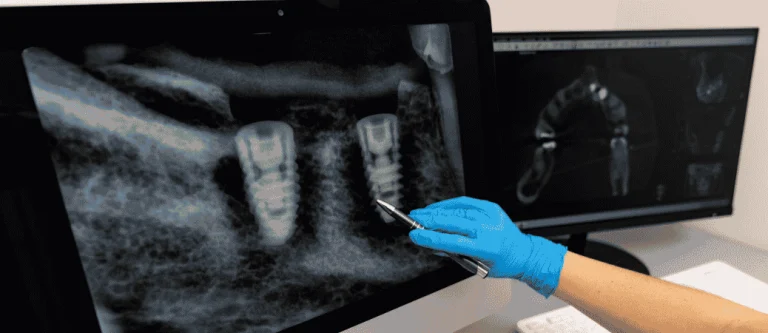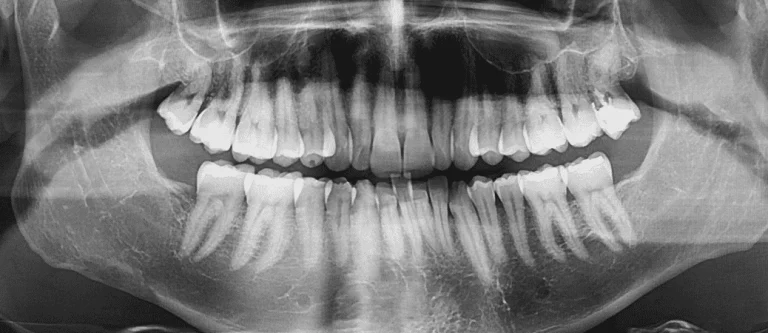
Missing teeth can make chewing harder, change your bite, and affect your confidence.
Comparing dental implants, bridges, and dentures can help you understand the main tooth replacement options for seniors in Fruitland Park, FL.
Your oral health, number of missing teeth, medical history, and treatment preferences will help determine which option may be appropriate.
Dental implants may provide a stable, long-term solution for seniors with suitable oral and general health, while bridges and dentures can meet different clinical needs, treatment preferences, and maintenance goals.
The right pick for you depends on your jawbone, your health history, and how much upkeep you want to take on.
This gets easier to sort out once you understand how each option holds up over time, what it costs, and what a good dentist will ask before recommending one.
Key Takeaways
- Dental implants may provide long-term stability and help maintain the jawbone, but they require surgery and a healing period.
- Conventional dentures avoid implant surgery and may have a lower initial cost, but they require daily maintenance and periodic adjustments.
- A good consultation should cover your bone health, medical history, and a full cost breakdown before you commit to any option.
Which Tooth Replacement Options Work Best for Seniors?
The best fit depends on how many teeth you’re missing, the health of your gums and jawbone, and how much maintenance you want to deal with day to day.
Each option, from a single implant to a full denture, works well for different situations, and understanding the differences helps you ask better questions at your next visit.
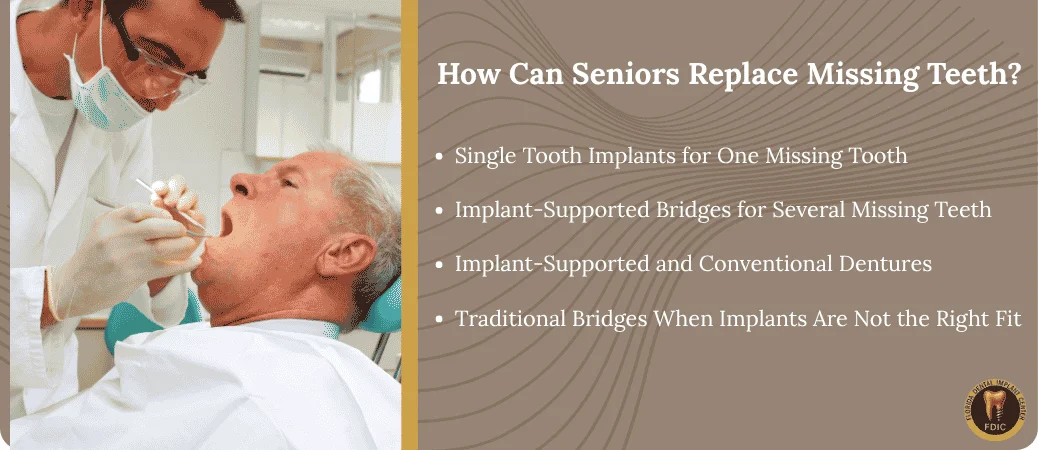
Single Tooth Implants for One Missing Tooth
A single tooth implant replaces one missing tooth with a titanium post set into the jawbone, topped with a crown that matches your other teeth.
It stands on its own, so your neighboring teeth don’t need to be touched or reshaped the way they would for a bridge.
This makes single tooth dental implants a suitable option when the neighboring teeth are healthy and worth preserving.
Because the implant post sits directly in the bone, it also helps keep that section of your jaw from shrinking over time, a change that naturally happens when a tooth root is missing.
Implant-Supported Bridges for Several Missing Teeth
An implant-supported bridge replaces a few teeth in a row using two or more implant posts as anchors, rather than relying on your natural teeth for support.
This spares nearby healthy teeth from being ground down, which is required for a traditional bridge. Implant-supported bridges also restore fuller chewing strength than many removable options, since they’re fixed firmly in the bone.
Implant-Supported and Conventional Dentures
Dentures replace a full arch or large sections of missing teeth, and come in two main styles: conventional (resting on the gums) and implant-supported (anchored to a handful of implant posts).
Conventional dentures and partials do not require implant surgery and may have a lower initial cost.
Implant-supported dentures add stability, since they snap onto posts instead of resting loosely on the gum ridge, and they help slow the bone loss that conventional dentures don’t prevent.
If you have worn conventional dentures for years and noticed a less secure fit, learn more about dental implants after long-term denture use and ask whether implant treatment may be appropriate for your jawbone.
Traditional Bridges When Implants Are Not the Right Fit
A traditional bridge anchors a replacement tooth to the natural teeth on either side of the gap. A dental bridge can restore a missing tooth without implant placement when the neighboring teeth can provide adequate support.
They restore chewing and speaking function quickly, though the anchor teeth need to be reshaped and the bridge may need replacing after some years of wear.
How Do You Choose the Right Option for Your Health and Lifestyle?
Your choice comes down to three practical factors: how much bone and gum support you have, how much daily upkeep fits your life, and whether any medical conditions affect surgery.
Missing teeth don’t just affect appearance; they can change how your jaw and remaining teeth function over time, so the right fix depends on your whole picture, not just the gap itself.
Jawbone and Gum Health
Enough bone and healthy gums are needed to support an implant securely. Bone naturally thins out after a tooth is lost, and significant loss may call for a bone graft before an implant can be placed.
Your dentist may discuss bone grafting or explain how dental implants with bone loss may still be possible after a detailed evaluation.
Chewing Comfort, Upkeep, and Treatment Goals
Fixed options like implants and bridges tend to feel closer to natural teeth when chewing, while removable dentures need daily cleaning and occasional refitting as gums change shape.
Think about what matters most to you: avoiding surgery, chewing without worry, or keeping costs lower now rather than later.
Medical Conditions and Implant Candidacy
Certain health conditions can affect whether implant surgery is advisable, so a full medical history review matters before committing to a plan.
Frailty and certain chronic conditions call for extra care when weighing surgical options.
At Florida Dental Implant Center, Dr. Raouf Morcos can review your medications, oral health, bone support, and relevant medical conditions before recommending implant treatment.
What Should You Expect from Implant Treatment?
Implant treatment unfolds in stages over several months, starting with an evaluation and ending with a custom-fitted restoration. Knowing what happens at each step helps you feel ready rather than caught off guard.

Evaluation and Implant Placement
Your dentist starts with a full exam, X-rays, and a conversation about your goals before any work begins.
During implant placement, the implant post is positioned in the jawbone after the treatment area has been numbed. Sedation may also be available when appropriate.
Recovery experiences vary, but temporary swelling, bruising, or soreness may occur. Follow the postoperative instructions provided by your dental team.
Healing, Osseointegration, and the Final Restoration
After placement, the implant needs time to fuse with your jawbone through a process called osseointegration, which typically takes several weeks to a few months.
Once healing is complete, your dentist attaches a small connector piece called an abutment, which holds the new crown, bridge, or denture in place.
The treatment timeline depends on healing, bone support, the number of implants, and whether preliminary procedures such as bone grafting are needed.
How Can Fruitland Park Seniors Plan for Treatment Costs?
Comparing costs starts with getting a complete written estimate, not just a quoted price for the implant post itself.
Seniors in Fruitland Park should request a complete written estimate that explains the planned treatment, preliminary procedures, follow-up care, and available payment options.
What an Estimate Should Include
A complete estimate should identify the restoration, implant components, preliminary procedures, sedation, and follow-up care included in the proposed fee.
The total cost depends on the number of missing teeth, the selected treatment, bone support, and the complexity of care.
Insurance, Medicare, and Financing Questions
Original Medicare generally does not cover routine dental care, dentures, or dental implants.
Some Medicare Advantage plans may include dental benefits, but covered treatments, provider requirements, and annual limits vary.
Review your plan details to understand whether it provides any dental benefits. You can also explore the practice’s financing and insurance options, including CareCredit, Cherry, and Proceed Finance, subject to approval.
Questions to Ask at a Local Consultation
Bring a short list of questions to your consultation so nothing gets missed in conversation:
- Am I a candidate for implants given my bone density and medical history?
- What does my complete estimate include, and what might add to it later?
- How long will healing and the full process take for my situation?
- Would an implant-supported denture work as a middle-ground option?
- What happens if I need a bone graft first?
A second dental opinion can help you better understand a proposed procedure, treatment alternatives, and expected outcomes before making a decision.
Finding a Tooth Replacement That Fits Your Needs

Replacing a missing tooth protects more than your smile. It supports your ability to eat comfortably, speak clearly, and keep your jawbone and remaining teeth healthy for years to come.
Whether you lean toward a single implant, an implant-supported bridge, or a denture, the right tooth replacement comes from an honest look at your oral health, your budget, and your comfort with surgery.
At Florida Dental Implant Center, the team can explain dental implants and help you compare them with restorative dentistry options such as bridges and dentures.
You can leave your consultation with a treatment plan based on your oral health, preferences, and long-term needs.
Frequently Asked Questions
What is the most effective tooth replacement for a senior missing one tooth?
A single dental implant may be an effective option for one missing tooth because it stands independently and does not require reshaping neighboring teeth.
A traditional bridge may be considered when implant surgery is unsuitable or the adjacent teeth already require crowns.
Are dental implants or dentures better for older adults?
Implants may provide greater stability and help maintain the jawbone, while conventional dentures do not require implant placement and may have a lower initial cost.
The right choice depends on oral health, medical history, and personal preferences.
How painful is getting one dental implant?
The treatment area is numbed during implant placement. Temporary soreness, swelling, or bruising may occur afterward, but the intensity and recovery time vary.
Your dental team will provide instructions for managing discomfort and protecting the treatment area.
Does Medicare cover dental implants in Florida?
Original Medicare generally does not cover routine dental implants. Some Medicare Advantage plans may offer dental benefits, but coverage, provider networks, and annual limits vary.
Review your plan details and request a written treatment estimate before proceeding.
Can seniors get free dental implants in Florida?
No program guarantees free dental implants for seniors in Florida. Patients concerned about treatment costs can request a personalized estimate and ask about available third-party financing options, subject to approval.