Bone loss does not always prevent you from receiving dental implants. With modern treatment options and careful planning, many patients with reduced jawbone volume can still restore their smile with stable, natural-looking replacement teeth.
Here is the good news. In most cases, there is no exact amount of bone loss that automatically rules out implants because bone grafts, sinus lifts, and specialized implant techniques may work around a thin or short jawbone.
What usually changes with greater bone loss is the complexity of treatment, not necessarily whether treatment is possible.
Still, bone matters. Your jawbone gradually shrinks after tooth loss because it no longer receives stimulation from a tooth root. This can be especially important when considering dental implants after long-term denture use
Here, you will learn how dentists evaluate your bone, which treatment options may be available, and what makes dental implants with bone loss a viable option.
Key Takeaways
- There is no fixed cutoff of bone loss that makes dental implants impossible for everyone.
- Dentists use 3D scans to measure the height, width, and density of your jawbone before planning treatment.
- Bone grafts, angled or shorter implants, and other tooth replacement options can help when bone is limited.
Table of Contents
- The Short Answer: There Is No Single Cutoff
- How Dentists Evaluate Available Jawbone
- Why Jawbone Loss Happens and Why It Matters
- Ways to Build or Work Around Lost Bone
- Choosing the Right Tooth Replacement Plan
- Protecting Your Results After Implant Treatment
- Frequently Asked Questions
The Short Answer: There Is No Single Cutoff
There is no magic number of millimeters that automatically disqualifies you from dental implants.
What actually matters is where the bone loss is, how much height and width remain, how dense that bone is, and which implant approach your surgeon plans to use.

Why Implant Candidacy Depends on Your Individual Anatomy
Your jaw is not the same thickness everywhere, so a measurement that rules out one site may be perfectly fine at another.
Most dentists look for roughly 10 mm of bone height and 6 mm of bone width as a comfortable starting point for a standard implant.
But those figures shift based on the implant diameter, the location, and the system being used, which is why there is no single universal number for bone requirements.
Bone quality counts too. Dense bone in the lower front jaw grips an implant tightly, while the softer bone in the back of the upper jaw offers less initial grip.
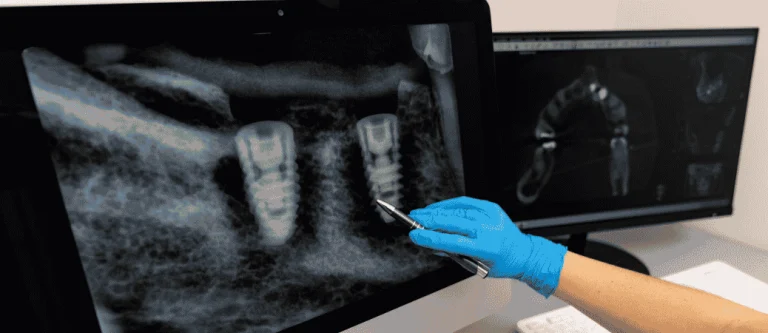
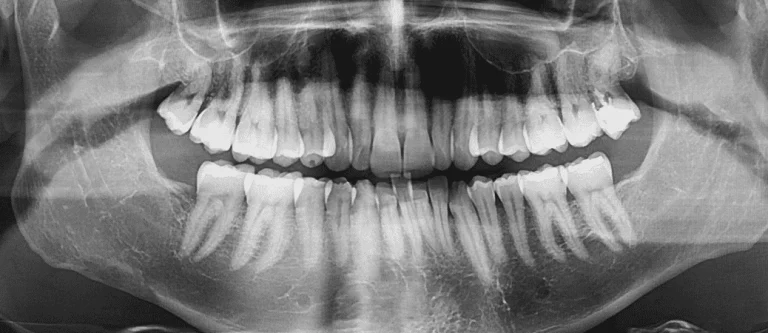
A 2D X-ray only shows height. A 3D cone beam scan shows width and density, and that extra detail often turns a “no” into a plan.
When Bone Loss Makes Standard Implant Placement Unsafe
Sometimes a regular implant genuinely does not belong in a spot, and an experienced dentist will tell you so.
Red flags include:
- Too little vertical bone above the inferior alveolar nerve in the lower jaw
- A knife-edge ridge that is too thin to hold an implant without splitting
- Sinus expansion that leaves only a few millimeters of upper jaw bone
- Active gum infection or uncontrolled periodontitis around the site
- Poor bone quality that cannot provide enough initial implant stability
None of these mean implants are off the table forever. They mean the standard approach needs to change, and more severe bone loss may call for alternatives such as grafting, shorter implants, or angled placement.
How Mild, Moderate, and Severe Bone Loss Differ
Thinking in categories helps you understand what your treatment might involve.
| Level | What’s happening | Typical approach |
| Mild | Small dips in the ridge, most height intact | Implant placed as usual, sometimes with a small graft at the same visit |
| Moderate | Noticeable loss of bone volume in height or width | Ridge augmentation or a sinus lift, then implants after 3 to 6 months of healing |
| Severe | Large portions of the ridge resorbed, insufficient jawbone for standard posts | Block grafts, tilted All-on-4 implants, or zygomatic implants anchored in the cheekbone |
Even at the severe end, what usually changes is the complexity of treatment and the expertise required, not whether implants can work at all.
There are limits, though. If almost no ridge remains and grafting cannot rebuild enough support, your dentist may recommend other tooth replacement options instead.
How Dentists Evaluate Available Jawbone
Before anyone talks about grafting or implant sizes, your dentist needs real numbers about your jawbone. That means measuring how tall, wide, and dense the bone is, taking a 3D scan, and checking what sits nearby.

Measuring Bone Height, Width, and Density
Your dentist looks at three things at the planned implant site:
- Bone height: How much vertical bone you have from the top of the ridge down to the nerve or up to the sinus.
- Bone width: How thick the ridge is from cheek side to tongue side. Bone often narrows after a tooth is pulled.
- Bone density and quality: Whether the bone is firm or soft.
Together, these give your total bone volume.
There is no single magic number. How much bone is needed depends on the implant size and where in the mouth it goes.
Softer bone doesn’t rule out an implant. It may just mean a wider implant, a gentler surgical technique, or extra healing time before the crown goes on.
Using CBCT Scans for Safer Treatment Planning
A regular dental X-ray is flat, so it can make bone look better than it really is. That’s why most implant planning today includes a cone beam computed tomography (CBCT) scan.
A cone beam CT scan gives a three-dimensional view in about 20 seconds. Your dentist can measure bone volume, density, and structure instead of estimating it.
With CBCT images, your dentist can:
- Measure bone in millimeters at the exact implant site
- See the true shape and angle of the ridge
- Plan the implant position digitally before surgery
- Decide if grafting is needed, and how much
This is also how many practices judge jawbone quality before treatment.
Checking Nerves, Sinuses, and the Implant Site
Bone measurements only matter if the implant can go in safely, so your dentist maps out what’s around it.
In the lower jaw, the main concern is the nerve that gives feeling to your lower lip and chin. Your dentist keeps a safety margin above it to lower the risk of numbness.
In the upper jaw, the sinus sits right above the back teeth. With upper jaw bone loss, the ridge shrinks while the sinus often expands downward, which cuts into usable height.
Your dentist also checks gum health, your bite force, and nearby tooth roots. Careful evaluation of the implant site helps confirm the implant can be placed where the tooth actually belongs.
Why Jawbone Loss Happens and Why It Matters
Your jawbone needs pressure from tooth roots to stay thick and strong, so it starts to shrink once teeth are gone or the tissue around them gets infected.
How much bone you keep also depends on things like gum health, denture use, smoking, and conditions such as diabetes or osteoporosis.
Bone Resorption After Tooth Loss
Every time you chew, your tooth roots send small signals into the bone that tell your body to keep rebuilding it. Remove the tooth, and those signals stop.
Your body then treats that bone as unused and begins to break it down. This process is called resorption, and cells called osteoclasts dissolve old bone tissue into the bloodstream.
The change starts fast. Bone begins shrinking within weeks of losing a tooth, with the biggest drop in the first six to twelve months.
Most of that loss happens in width first, then height. That matters because implants need a certain amount of bone on all sides to stay stable.
The longer a gap sits empty, the more the alveolar bone that supports your teeth fades away. Nearby teeth can also drift into the space, which adds another problem to fix later.
The Effects of Gum Disease and Long-Term Dentures
Gum disease is the other main cause. When plaque bacteria stay under the gumline, your body’s response to the infection slowly destroys the bone holding your teeth in place.
Early gum inflammation doesn’t harm bone, but periodontitis does. Once bone is lost to periodontal disease, it does not grow back on its own.
Traditional dentures create a different problem. They rest on top of your gums and never reach the bone, so nothing replaces the stimulation your roots used to provide.
Full and partial dentures can also press on the ridge, which speeds up shrinkage in that area. That’s why dentures often need relining every few years, the jaw underneath keeps changing shape.
If you’ve worn dentures for a decade or more, expect bone loss to affect your implant options and possibly require bone grafting first.
Health and Lifestyle Factors That Can Affect Healing
Your general health plays a real part in how much bone you keep and how well you heal after implant surgery.
Here are the factors your dentist will ask about:
- Smoking: Reduces blood flow to the gums and raises the risk of implant failure and gum infections.
- Diabetes: Poorly controlled blood sugar slows healing and makes gum disease worse.
- Osteoporosis: Lowers bone density throughout the body, including the jaw.
- Autoimmune conditions: Some diseases and their medications affect bone turnover and healing.
- Oral hygiene: Skipping brushing and flossing lets plaque build up around teeth and implants.
None of these automatically rule out implants. They just mean your dentist may want to check your bone health carefully before planning treatment.
Good daily habits with professional cleaning & exams protect the bone you still have. That’s true both before an implant and for years afterward.
Ways to Build or Work Around Lost Bone
Missing bone doesn’t have to end your implant plans. Your dentist can either rebuild the bone with a graft or place implants in spots where solid bone still exists, using special lengths, widths, and angles.
Bone Grafting and Ridge Augmentation
A bone graft adds material to a thin or short spot in your jaw so it can hold an implant. Ridge augmentation is a type of graft that builds up the top and sides of the jaw ridge to gain both height and width.
Graft material comes in a few forms:
| Type | What it is |
| Autograft | Your own bone, often taken from your jaw or chin |
| Allograft | Processed bone from a tissue bank |
| Xenograft | Treated bone from a cow, widely used and predictable |
| Synthetic | Man-made material that encourages bone regeneration |
Healing usually takes several months before implant placement, though small grafts can sometimes happen the same day as surgery. Both bone grafting and ridge augmentation can create a strong base where there wasn’t one before.
Sinus Lifts for Bone Loss in the Upper Back Jaw
Your sinus cavities sit right above your upper back teeth. After you lose those teeth, the sinus often drops lower, which leaves too little height for an implant.
A sinus lift fixes this. Your surgeon gently raises the sinus membrane and packs graft material into the space underneath.
That new bone typically needs about four to six months to mature. After that, your dentist can place the implant with enough bone around it to stay stable.
Sinus lifts are one of the most common answers to upper jawbone loss, and they’re often paired with grafting in other spots during the same visit.
Short, Narrow, and Angled Implant Options
Sometimes you can skip grafting entirely by changing the implant instead of the bone.
- Short implants work when bone height is limited but a nerve or sinus sits close by.
- Narrow or mini implants fit thin ridges that can’t hold a standard-width post.
- Angled implants are tilted so they catch thicker bone off to the side instead of the soft bone straight below.
Angling matters most in cases like All-on-4 and All-on-X. Tilting the back implants lets them dodge the sinuses on top and the nerve in the lower jaw while still gripping firm bone.
Modern implant design and mini implant choices also include surfaces made to bond better with softer bone.
Zygomatic and Pterygoid Implants for Complex Cases
When the upper jaw has almost no usable bone left, your surgeon can anchor implants somewhere else.
Zygomatic implants are long posts, roughly 30 to 50 mm, that reach up into the zygomatic bone, better known as your cheekbone.
That bone doesn’t shrink after tooth loss, so it stays dependable. Two to four zygomatic implants plus a few standard ones in front can support a full arch, often with teeth attached the same week.
Pterygoid implants grab dense bone at the very back of the upper jaw, behind where your molars were.
Both take real surgical training, so ask how often your provider does them.
Choosing the Right Tooth Replacement Plan
The amount of bone you have left helps decide whether you get individual implants, an implant-supported full arch, or a non-surgical option like a bridge or denture.
Cost, healing time, and how many teeth you’re replacing all play a part too.
When Implant-Supported Dentures or All-on-4 May Help
If you’re missing most or all of your teeth in one jaw, an All-on-4 or similar full-arch plan can be a smart fit.
Four to six implants hold a fixed bridge of teeth, and they’re often angled to use the bone you still have near the front of the jaw.
That angling matters. It lets your surgeon skip or shrink a sinus graft, which shortens the wait between surgery and finished teeth.
Many patients also get immediate function, meaning a temporary set of teeth goes on the same day as implant placement. The final teeth come later, after the bone heals around the posts.
Removable implant-supported dentures, sometimes called overdentures, are another route. They snap onto two to four implants and cost less than a fixed arch, though you still take them out at night.
When Traditional Bridges or Removable Dentures May Be Better

Sometimes surgery isn’t the best answer, and that’s okay. A dental bridge can work well if the teeth on both sides of the gap are healthy and strong.
It doesn’t need bone volume at the gap, and it’s usually finished in two or three visits.
The trade-off: your dentist has to file down those neighboring teeth, and the bone under the bridge keeps shrinking over time.
Removable partial dentures make sense when you’re replacing several teeth in different spots, or when you want a lower-cost option while you save for implants.
Full dentures remain a reasonable choice if you’ve had severe bone loss and want to skip surgery altogether.
Health matters too. Uncontrolled diabetes, smoking, or medications that slow healing can push you toward these non-surgical tooth replacement options.
Questions to Ask an Oral Surgeon Before Treatment
Bring a list to your consultation. A good oral surgeon will welcome it.
- How much bone do I actually have? Ask to see your CBCT scan and the measurements in millimeters.
- Do I need a graft, and what type? Autograft, allograft, xenograft, and synthetic materials each heal differently.
- Am I a candidate for zygomatic or pterygoid implants? These reach bone outside the upper jaw and can replace sinus grafting.
- How long from first surgery to final teeth? Grafting can add four to nine months.
- What’s the total cost? Ask for a written plan that includes extractions, grafts, temporaries, and the final restoration, since added procedures raise the price.
- How many of these cases have you done? Zygomatic and full-arch work needs specific training.
- What happens if an implant fails? Get the warranty and replacement policy in writing.
Protecting Your Results After Implant Treatment
Once your implant is placed, the bone and gum tissue around it need steady care to stay healthy. What you do in the first few months, and in the years that follow, has a real effect on how long your implant lasts.
Osseointegration and the Healing Period
Osseointegration is the process where your jawbone grows tightly against the implant surface. It usually takes about three to six months, though healing can take longer if you had a bone graft or sinus lift.
During this time, the implant needs to stay still. Chewing hard foods on the site too early can disturb the bond and reduce implant stability.
Your dentist may ask you to:
- Stick to soft foods for the recommended period.
- Avoid poking the area with your tongue or fingers
- Skip smoking and vaping while you heal
- Take antibiotics or rinses exactly as prescribed
Some crestal bone remodeling in the first year is normal. After that first year, dentists generally like to see less than 0.2 mm of annual bone loss.
Reducing the Risk of Implant Failure
Most implant problems trace back to a handful of causes. Bite force, implant position, bone density, and the tiny gap between the implant and abutment can all contribute to bone loss around the neck of the implant.
Smoking is one of the biggest risk factors you can actually control. It slows healing and raises your odds of peri-implantitis.
Grinding your teeth is another. A custom night guard spreads out the pressure and protects both the implant and the crown.
If you have a history of periodontitis, tell your dentist. Untreated gum disease around your natural teeth can spread bacteria to the implant site, and careful planning to limit crestal bone loss matters even more in those cases.
Maintaining Healthy Gums and Bone Long Term

Daily oral hygiene is the simplest way to protect your investment. Brush twice a day, and clean under and around the implant crown with floss threaders, interdental brushes, or a water flosser.
Plan on professional cleanings every three to six months. Your hygienist checks probing depths and looks for bleeding, which are early warning signs of trouble.
X-rays taken at regular intervals let your dentist compare bone levels over time. Catching a change early gives you more treatment choices, since bone loss past 50% of the implant length often means the implant needs to come out.
Call your dentist if you notice swelling, pus, a bad taste, or any looseness. Early treatment of bone loss around an implant gives you a much better chance of keeping it.
Frequently Asked Questions
Bone loss doesn’t automatically rule out implants, but it does change the plan, the timeline, and sometimes the price.
Here are straight answers to the questions patients ask most, from grafting options to warning signs of trouble around an existing implant.
Can I still get dental implants if I have significant jawbone loss?
Usually, yes. Very few people are truly out of options, and many are told “no” simply because a particular office doesn’t offer advanced procedures.
Severe loss changes the complexity of treatment and the expertise required, not whether implants can work at all. Grafting, tilted implants, and zygomatic implants can all create a path forward.
Even people who have worn dentures for years are frequently still treatable with the right protocols. A cone beam CT scan is the only way to know your real situation.
How much bone loss can occur before an implant is likely to fail?
For an implant that’s already in place, a small amount of bone change is normal. Most clinicians expect up to about 1 mm of loss in the first year, then roughly 0.2 mm each year after that.
Loss that moves faster than this, especially with infection, is a red flag. Once bone loss reaches about a third to half of the implant’s length, keeping it becomes difficult.
What are the signs of bone loss around a dental implant?
Some signs you can notice yourself:
- Gums that bleed when you brush near the implant
- Red, puffy, or tender gum tissue
- Gum recession that exposes the metal threads
- A bad taste or ongoing bad breath
- Any looseness or shifting of the crown
Your dentist will also check pocket depth and take X-rays. Bone loss often shows up on a scan long before you feel anything, which is why regular checkups matter.
What causes bone loss around dental implants?
The most common cause is peri-implantitis, an infection of the gum and bone around the implant. It starts with plaque buildup and gets worse if it isn’t treated.
Other contributors include smoking, poorly controlled diabetes, and a bite that puts too much pressure on one implant. Grinding your teeth adds stress, too.
Bone loss can also happen before implants ever enter the picture. After a tooth is removed, shrinkage moves fastest in the first six months, when nearly half the bone volume can disappear.
Can bone grafting make dental implants possible with severe bone loss?
In most cases, yes. Grafting adds material to the thin or short area, and over several months your body builds new bone around it.
In the upper back jaw, a sinus lift raises the sinus membrane and fills the space below it. In other spots, a ridge graft widens or heightens the jaw before the implant goes in.
Timing depends on how much bone you have left. Sometimes the graft and implant happen the same day, and sometimes you need the graft to heal first, then the implant later.
How much does treatment for dental implants with bone loss cost?
Costs vary a lot by region, by the surgeon, and by how much bone you need to rebuild. A small graft placed at the same time as the implant usually adds a modest amount to the total. Larger procedures cost more.
A sinus lift or a block graft taken from another part of your jaw involves more surgery time and materials, so the fee goes up.
Full-arch solutions and zygomatic implants sit at the higher end, since they require specialized planning and more implants.