If you have worn dentures for 10 years or more, you may wonder if dental implants are still an option. Loose fits, sore spots, and limits on what you can eat can make you want a more stable tooth replacement.
Yes, you can often get dental implants even after wearing dentures for 10+ years, but your jawbone health and overall oral health will decide what options work best for you
Long-term denture use can lead to bone loss, yet many people still qualify for implants with the right plan.
Modern treatments can replace traditional dentures with secure snap-in dentures. You can restore comfort, improve function, and protect your jawbone when you choose the right approach.
Key Takeaways
- You can often switch from dentures to dental implants, even after many years.
- Your jawbone and oral health play a key role in implant success.
- Implant treatment can improve comfort, stability, and daily function.
Table of Content
- Comparing Dental Implants and Traditional Dentures
- Impact of Long-Term Denture Wear on Jawbone and Oral Health
- Eligibility for Dental Implants After Years of Denture Use
- Treatment Solutions for Bone Loss and Implant Placement
- Process of Transitioning from Dentures to Dental Implants
- Benefits and Quality of Life Improvements with Implants
- Frequently Asked Questions
Comparing Dental Implants and Traditional Dentures
Dental implants and dentures both replace missing teeth, but they work in very different ways. Your choice affects how you eat, speak, and feel each day.
How Dental Implants Work
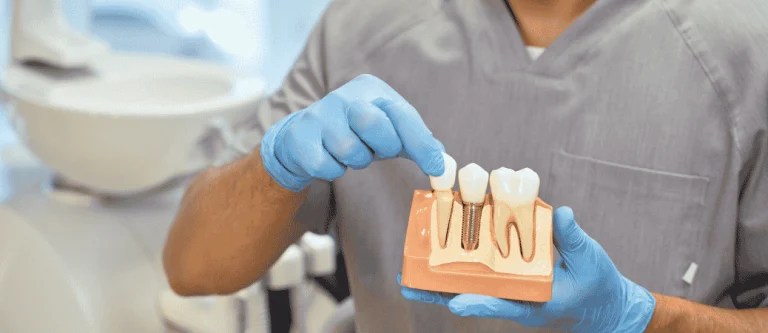
Dental implants replace both the tooth and the root. A dentist places a small titanium post into your jawbone, where it bonds with the bone over time.
This bond helps hold the implant firmly in place. After healing, your dentist attaches a crown or a full arch of implant-supported teeth to the post.
Because the implant sits in the bone, it helps reduce bone loss that often happens after you lose teeth. That support can matter if you have worn dentures for many years and already have some bone shrinkage.
You can also choose implant-supported dentures, which use a few implants to anchor a full denture. These may snap into place and stay secure while you eat and talk.
Many people report better chewing strength and clearer speech with implants. You brush and floss them much like natural teeth, and you do not remove them at night unless your dentist tells you to do so.
How Dentures Function
Dentures rest on top of your gums. They do not attach to the jawbone.
Your dentist makes removable dentures from acrylic and other materials that look like natural teeth and gums. A full denture replaces all teeth in the upper or lower arch.
A partial denture fills gaps when you still have some natural teeth.
Removable dentures rely on suction, muscle control, and sometimes adhesive to stay in place. Over time, your jawbone can shrink, which may change the fit.
You may need adjustments or relines to keep them comfortable. Fit and bone health both play a role in how well dentures function long term.
You also remove dentures daily for cleaning and usually take them out at night.
Key Differences in Comfort and Stability
The biggest difference you notice is stability. Dental implants stay fixed in your mouth, while traditional dentures can shift.
Common issues with removable dentures:
- Slipping dentures during meals
- Clicking sounds when you speak
- Sore spots on the gums
- Limits on hard or sticky foods
Implant-supported teeth do not move in the same way. Because they anchor to implants in your jaw, they feel closer to natural teeth.
Many people find that this added stability improves their quality of life. They feel more confident eating in public and speaking in groups.
Implants also help preserve bone, while dentures sit on top of the gums and do not stop bone loss. For long-term denture wearers, this difference can affect comfort and fit over time.
Impact of Long-Term Denture Wear on Jawbone and Oral Health
Wearing removable dentures for many years changes your jawbone and soft tissues. These changes can affect your fit, comfort, and long-term oral health.
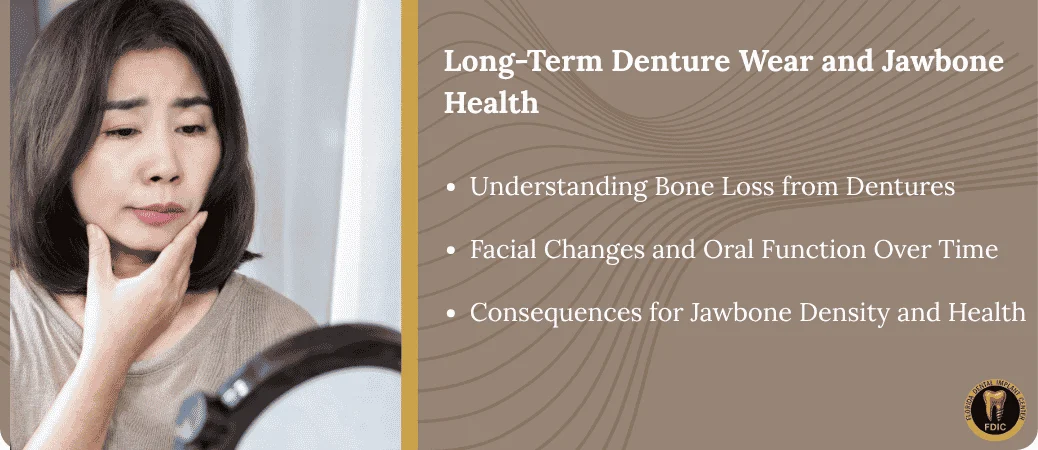
Understanding Bone Loss from Dentures
When you lose natural teeth, you also lose the tooth roots that stimulate your jawbone. Without that stimulation, your body begins to break down bone in the area. This process lowers your jawbone density over time.
Traditional removable dentures sit on top of your gums. They do not replace tooth roots or prevent bone loss. In fact, dentures and bone loss are closely connected, especially when worn for many years.
Long-term denture wearers often notice that their dentures feel loose after a few years. This happens because the jawbone shrinks and changes shape. As the bone gets smaller, the denture has less support.
Bone loss can also limit your future treatment options. If your jawbone becomes too thin or soft, you may need bone grafting before getting dental implants.
Facial Changes and Oral Function Over Time
As your jawbone shrinks, your facial structure can change. You may notice that your lips look thinner or your chin moves closer to your nose. These changes happen because the bone that supports your face has decreased.
Over time, removable dentures can also affect how well you chew and speak. A loose fit may cause sore spots, gum irritation, or clicking when you talk.
Studies show that long-term denture wearers often develop soft tissue problems.
One clinical review found a high rate of oral mucosal lesions in people with older prostheses, which supports the need for regular monitoring of long-term denture wearers.
Poor fit can also reduce your bite strength. You may avoid certain foods, which can affect your nutrition and overall health.
Consequences for Jawbone Density and Health
Bone loss does not stop once it starts. Each year without tooth roots, your body may continue to resorb small amounts of bone. This ongoing change affects your jawbone health and the stability of your dentures.
Lower jawbone density can make it harder to place dental implants later. Your dentist will check bone volume with imaging to see if you still have enough support.
You should also consider your gum condition and general health. Many patients who have worn dentures for 10 years or more can still qualify for implants after a full exam.
Taking action sooner can protect more of your remaining bone. The longer you wait, the more changes may occur in your jaw and oral tissues.

Eligibility for Dental Implants After Years of Denture Use
You can often get dental implants after dentures, even if you have worn them for more than 10 years. Your bone level, health history, and age will guide your implant dentist in planning safe and stable treatment.
Assessing Jawbone Density and Structure
Your jawbone must hold each implant in place. After years of denture use, you may have some bone loss because the bone no longer receives pressure from natural tooth roots.
An implant dentist or prosthodontist will take 3D scans and X-rays to measure your jawbone density and width. These images show if your bone can support oral surgery or if you need extra steps first.
Many long-term denture wearers still qualify for implants. If your bone is thin or soft, your provider may suggest bone grafting.
Bone grafting adds volume to weak areas of your jaw. The graft heals over several months and creates a stronger base for implant dentistry.
In some cases, you can place implants at the same time as the graft. In other cases, you wait for healing before moving forward.
Health Factors That Influence Success
Your general health plays a major role in implant success. You must heal well after implant surgery and maintain healthy gums.
Your provider will review:
- Diabetes control
- Smoking habits
- Gum disease history
- Medications that affect bone healing
If you have worn dentures for many years, you may still qualify for implants, even with some bone loss. However, you need stable health and good oral hygiene.
Active gum infection must be treated before implant placement. Smoking can slow healing and increase the risk of implant failure. Your implant dentist may ask you to stop smoking before and after surgery to improve results.
Age Considerations for Implant Dentistry
Your age alone does not disqualify you from implants after dentures. Healthy adults in their 60s, 70s, and even 80s receive implants every year.
What matters most is your bone quality and overall health, not your birth date. If you manage chronic conditions and can undergo minor oral surgery, you may still be a strong candidate.
Implant dentistry often improves chewing ability compared to traditional dentures. Many patients choose implants because they want more stability and comfort than removable dentures provide.
Your prosthodontist will design a plan that fits your age, health status, and goals. This may include implant-supported dentures or fixed implant bridges, depending on how much support your jawbone can provide.
Treatment Solutions for Bone Loss and Implant Placement
If you have worn dentures for more than 10 years, your jawbone may have shrunk. Modern implant methods can rebuild bone or work around it so you can still get stable teeth.
Bone Grafting and Healing Time
Bone grafting adds volume to areas where your jaw has thinned. A surgeon places bone graft material in the weak area so your body can build new bone there.
Grafts can use your own bone, donor bone, or synthetic material. Your dentist chooses the type based on how much bone you have lost and where implants will go.
Healing takes time. Many patients need 3 to 9 months before implant placement so the graft can bond with your natural bone.
During this period, new bone forms and prepares for strong osseointegration.
Bone grafting is one of the most common ways to treat bone loss before implants. Your dentist will confirm healing with X-rays before moving forward.
Sinus Lift and Zygomatic Implants for Severe Loss
Upper back teeth often sit near the sinus cavity. If you lost bone in this area, your dentist may suggest a sinus lift.
A sinus lift raises the sinus floor and adds bone underneath it. This creates enough height for secure implant placement in the upper jaw.
If bone loss is severe, traditional implants may not work. In these cases, some specialists use zygomatic implants, which anchor into the cheekbone instead of the jaw.
Zygomatic implants avoid the need for large grafts. They work well when the upper jaw has very little bone.
All-on-4 and All-on-X Techniques
If you wear full dentures, you may not need an implant for every missing tooth. All-on-4 and All-on-X systems use four or more implants to hold a full arch of teeth.
These implants are placed at angles to use the strongest parts of your jaw. This often reduces the need for bone grafting.
“All-on-X” simply means your dentist may use five or six implants instead of four. The number depends on your bone quality and bite force.
These systems can support fixed teeth that do not come out at night. They also allow for faster treatment in some cases, sometimes with temporary teeth placed soon after surgery.
Choosing Between Fixed Teeth and Overdentures
You can choose between fixed implant teeth and implant-supported dentures, also called overdentures. Both improve stability compared to regular dentures.
Fixed teeth stay in your mouth at all times. Only your dentist removes them for maintenance. They feel closer to natural teeth and do not move when you eat.
Overdentures snap onto two or more implants. You remove them daily for cleaning. They cost less than full fixed bridges and need fewer implants.
Your choice depends on bone volume, budget, and how much stability you want. A full exam and 3D scan will help you decide what fits your needs best.
Process of Transitioning from Dentures to Dental Implants
You can move from dentures to dental implants even after 10 or more years of wear. The process includes a detailed exam, implant surgery, healing time, and placing your new teeth.
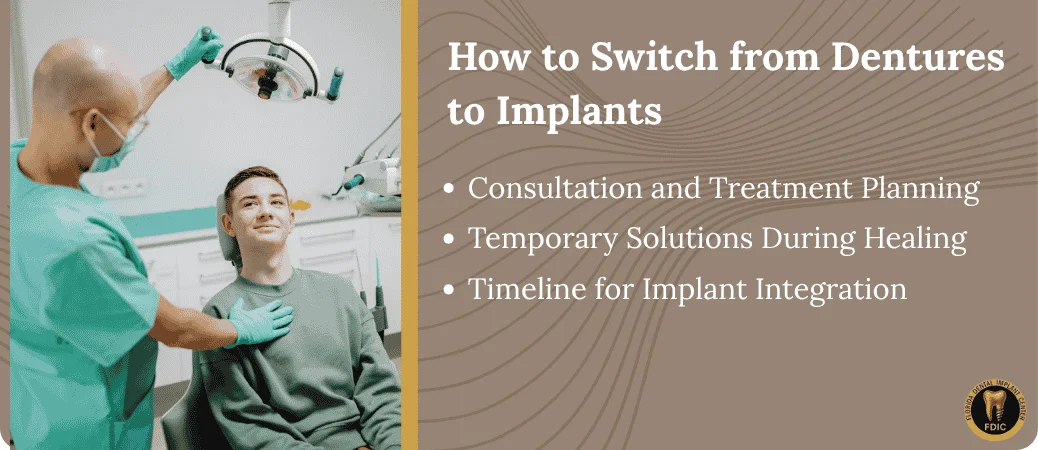
Consultation and Treatment Planning
You start with a full dental exam. Your dentist checks your gums, jawbone, and current denture fit.
They often take digital X‑rays or a 3D scan to measure bone height and thickness. Long-term denture wearers may have some bone loss, which can affect implant placement.
During this visit, you discuss your goals. You can choose between:
- Fixed full-arch implants that stay in place
- Implant-supported dentures that snap on and off
If your bone is too thin, your dentist may suggest bone grafting before implant surgery. Some clinics explain how patients can switch from dentures to implants with added support when needed.
You also review your health history. Conditions like uncontrolled diabetes or heavy smoking can affect healing time.
Temporary Solutions During Healing
After implant surgery, your jaw needs time to heal. This healing phase allows the implant posts to bond with your bone.
You will not go without teeth during this time. Many denture wearers keep using a temporary denture while the implants heal.
In some cases, your dentist can adjust your current denture to fit over the implants. Other times, they make a new temporary set for better comfort and fit.
If you choose implant-supported dentures, your provider may attach a temporary version first. This helps you adjust before placing the final teeth.
Modern options like implant-supported overdentures can improve stability compared to traditional removable dentures, even during early stages.
Your dentist will give clear rules about eating soft foods and avoiding pressure on the implants.
Timeline for Implant Integration
Healing time varies, but most people need 3 to 6 months for full implant integration. During this period, the bone grows around the implant in a process called osseointegration.
If you need bone grafting, your total timeline may extend by a few months. Your dentist will monitor healing with follow-up visits.
Some patients qualify for immediate-load implants, where temporary teeth attach soon after surgery. However, this depends on bone strength and overall health.
Once healing is complete, your dentist secures your final teeth. At that point, your transition from dentures to implants is complete, and your new teeth should feel stable and secure.
Benefits and Quality of Life Improvements with Implants
When you switch from long-term dentures to implant-supported teeth, you gain more stability, stronger chewing power, and better daily comfort.
Many people notice real changes in how they eat, speak, and feel about their smile.
Improved Comfort and Eating
Traditional dentures rest on your gums. Over time, they can rub, shift, or need adhesive to stay in place.
Implant-supported teeth anchor into your jawbone. This support keeps them steady when you bite and chew. You do not need glue or pastes each day.
With fixed teeth, you can often eat foods that felt risky with dentures. Many patients report better control when chewing meat, raw vegetables, and nuts. You may also speak more clearly because your teeth stay in place.
If you choose a full-arch option like fixed full arch dental implants, the teeth do not rest on your gums. This design reduces sore spots and pressure.
Better comfort and stronger bite force can improve your daily routine. Eating becomes less stressful and more predictable, which can raise your overall quality of life.
Aesthetic Enhancements and Confidence

Loose dentures can shift when you laugh or talk. That movement can make you feel self-conscious in social settings.
Implant-supported teeth stay secure. They do not slip during meals or conversations. This stability helps you relax and focus on the moment instead of your dentures.
Modern implants also allow your dentist to design teeth that fit your face and smile. The shape, color, and position can look natural and balanced.
When you replace missing teeth with fixed teeth, your jawline may also look fuller. Implants support the bone, which can help maintain facial structure over time.
Feeling confident about your smile often affects more than appearance. You may smile more in photos, speak up in meetings, and enjoy time with friends without worry.
Long-Term Oral Health Benefits
Dentures replace missing teeth, but they do not stimulate the jawbone. Over many years, this lack of stimulation can lead to bone shrinkage.
Dental implants act like tooth roots. They transfer chewing forces into the bone, which helps maintain bone levels in many patients. This support plays a key role in long-term oral health.
Implants can also help protect nearby teeth. If you still have natural teeth, a well-planned tooth replacement does not rely on grinding them down for support.
Daily care is simple. You brush and clean around implant-supported teeth much like natural teeth, depending on whether they are fixed or removable.
By choosing implants after 10 or more years in dentures, you invest in a tooth replacement option designed for stability, function, and lasting oral health.
Frequently Asked Questions
You can often get dental implants even if you have worn dentures for more than 10 years. Your jawbone health, medical history, and treatment goals matter more than how long you have been without teeth.
Am I still a candidate for dental implants if I have no natural teeth left?
Yes, you may still qualify even if you have no natural teeth. Many people with full dentures move to implants after years of tooth loss.
Dentists place implants in the jawbone, not in natural teeth. If you have some bone left, you may qualify for options like dental implants after wearing dentures.
If your bone has shrunk, your dentist may suggest a bone graft to build support before placing implants.
Can I switch from traditional dentures to implant-supported dentures after many years?
Yes, you can often switch even after decades of denture use. Many patients replace loose dentures with a more stable option.
Implant-supported dentures use two or more implants to hold your denture in place. They snap on and off but feel more secure than traditional dentures.
What factors could disqualify someone from getting dental implants?
Severe bone loss can delay treatment, but it does not always rule you out. Bone grafting can often rebuild lost bone.
Uncontrolled diabetes, heavy smoking, or certain immune disorders can also lower implant success. Your dentist will review your health history before moving forward.
Poor oral hygiene can cause implant failure. You must commit to daily care and regular checkups.
Is there an age or time limit where it becomes too late to get dental implants?
There is no strict age limit for implants. Many people in their 60s, 70s, and even 80s receive them.
What matters most is your overall health and bone quality. Even if you have worn dentures for many years, you may still qualify for implants after 10 years or more of use.
Can I keep wearing my dentures while my dental implants are healing?
In many cases, yes. Your dentist can adjust your current denture so you can wear it during healing.
Some patients receive a temporary denture made to fit over healing implants. Healing usually takes several months as the implant bonds with your bone.
Your dentist will give clear instructions to protect the implants during this time.
How much do snap-in denture implants or an All-on-4 treatment typically cost?
Costs vary by location, number of implants, and whether you need bone grafting. Snap-in dentures usually cost less than a fixed full-arch option.
An All-on-4 or similar full-arch treatment uses four or more implants to support a fixed set of teeth.
Dental insurance may cover part of the procedure, but many plans offer limited implant benefits. Many offices provide payment plans to help manage the cost.