If you have noticed your smile looks a little different lately, you are not imagining it.
Adult tooth movement is common and usually happens because of gum health changes, teeth grinding, missing teeth, or your old retainer no longer fitting right.
Shifting teeth can feel worrying, but the good news is there are clear steps you can take once you know why it is happening.
Your mouth changes throughout your life, even long after braces or other dental work. Small shifts might show up as new gaps, crowding, or bite changes that make chewing feel different.
Understanding what is behind these changes can help you protect your oral health and stop small issues from turning into bigger ones.
This guide walks you through what causes teeth shifting in adults and which restorative treatment actually work to fix it.
You will also learn how to keep your teeth stable once you get them back in place, so your smile stays healthy for years to come.
Key Takeaways
- Noticing changes in your smile early makes it easier to treat the cause before it gets worse.
- Your teeth can move throughout adulthood due to factors like gum health, grinding, missing teeth, and natural jaw changes.
- Wearing a retainer and keeping up with dental checkups helps keep your teeth stable after treatment.
What to Do First When You Notice Movement
If you notice your teeth moving, don’t panic. The first step is simple: get your mouth checked out and pay attention to any other symptoms you might have.
Schedule a Dental Checkup and Examination
The best thing you can do is book a dental exam as soon as you can. Your dentist can figure out why your teeth are moving and catch small problems before they turn into big ones.
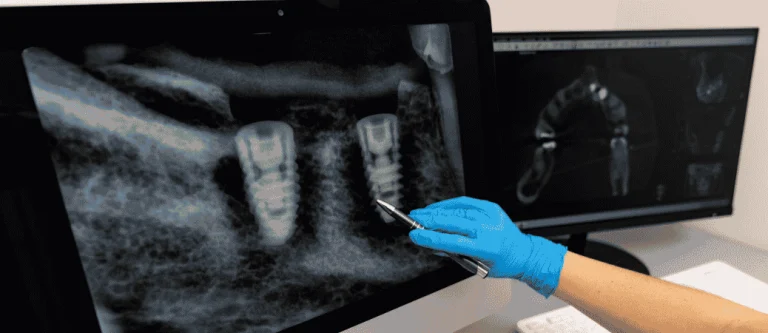
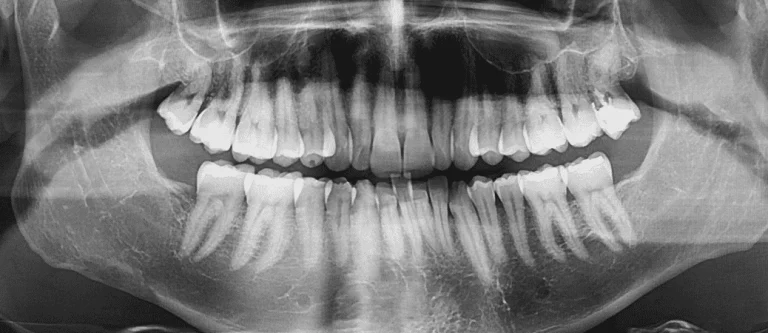
During your visit, your dentist will check your bite alignment and look at how your teeth fit together. They may also take X-rays to see what’s happening below the gum line, like bone loss or hidden decay.
Your dentist will also check for gum disease as a common cause of tooth movement. This is important because gum health plays a big role in keeping your teeth stable.
Try not to wait too long between noticing the shift and getting it checked. The sooner you get answers, the easier it usually is to fix.
Signs That Need Prompt Dental Care
Some symptoms mean you should call your dentist right away instead of waiting for a routine visit. Pay close attention if you notice any of these:
- Loose teeth or tooth mobility that feels different from normal
- Bleeding gums when you brush or floss
- Swollen gums that look red or feel tender
- Tooth sensitivity to hot, cold, or sweet foods
- Jaw pain or jaw discomfort that doesn’t go away
- Teeth that suddenly feel like they don’t fit together right when you bite down
These signs can point to gum disease or other dental conditions that cause shifting. Catching these symptoms early gives your dentist more options to treat the problem and protect your smile.
How Teeth Can Move During Adulthood
Your teeth are not fixed in place. They sit in a living system of bone and soft tissue that responds to pressure every day, which means small shifts can add up over the years.

The Role of Bone Remodeling and Periodontal Ligaments
Your teeth are held in place by a stretchy tissue called the periodontal ligament. This ligament connects each tooth root to the jawbone and lets your teeth move very slightly under pressure.
Every time you chew, talk, or clench your jaw, you put small amounts of force on your teeth. Your body responds by breaking down old bone cells and building new ones in a process called bone remodeling.
This process is normal and happens throughout your life. But it also means your teeth can slowly drift out of place if the forces on them are not balanced.
Over time, this movement can lead to changes in your bite and dental alignment.
Natural Aging, Mesial Drift, and Bite Wear
As you get older, your jawbone and facial muscles change shape. This is a normal part of natural aging, but it can affect how your teeth fit together.
One common pattern is called mesial drift. This is when your teeth slowly move forward, toward the front of your mouth, over many years.
Mesial drift happens because of constant pressure from chewing and from the natural forward push of your back teeth. At the same time, your teeth wear down slightly from years of biting and grinding.
This wear can change your bite. Your teeth may not line up the same way they did when you were younger, which can lead to teeth shifting and spreading apart.
Why Lower Front Teeth Often Become Crowded
Your lower front teeth are often the first to show signs of shifting. This area tends to get crowded more than other parts of your mouth.
This happens for a few reasons:
- Limited space: Your lower jaw has less room for tooth movement compared to your upper jaw.
- Forward pressure: Mesial drift pushes your back teeth forward, which squeezes your front teeth together.
- Ligament memory: Your periodontal ligaments can pull teeth back toward old positions, especially after orthodontic treatment.
Over time, this pressure can cause your lower front teeth to overlap. You may notice small gaps closing, or teeth twisting slightly out of place, which is often one of the first visible signs of tooth movement.
Common Causes of New Gaps, Crowding, and Bite Changes
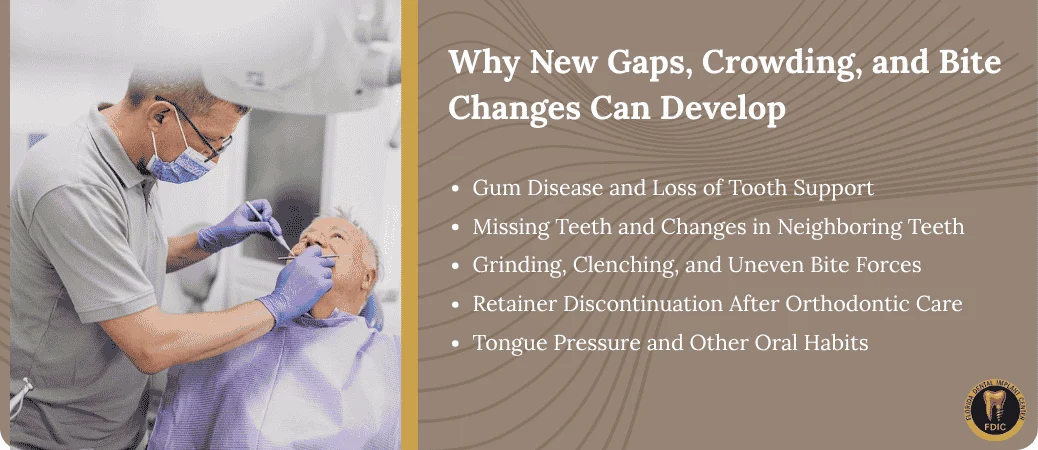
Several factors can cause your teeth to move even after years of staying put. Gum health, missing teeth, grinding habits, skipped retainers, and certain daily habits are some of the most common reasons behind these changes.
Gum Disease and Loss of Tooth Support
Your gums and jawbone hold your teeth in place. When gum disease sets in, this support can break down over time.
Periodontal disease causes inflammation that slowly damages the bone and tissue around your teeth. As bone loss and gum recession progress, teeth lose their anchor and can drift or tilt.
This often shows up as new gaps or teeth that suddenly feel loose. You might also notice your bite feels different than before.
Catching gum disease early can help protect your smile. A dentist can check for signs of bone loss and gum health concerns that may be affecting your alignment.
Missing Teeth and Changes in Neighboring Teeth
An empty space in your mouth rarely stays empty for long. When you lose a tooth, the teeth around it often shift to fill the gap.
This can happen after tooth loss from decay, injury, or wisdom teeth removal. Even one missing tooth can throw off your whole bite over time.
Neighboring teeth may tilt, drift, or rotate as they move toward the open space. This shifting can lead to crowding in one area and new gaps in another.
Replacing a missing tooth early, with an implant or bridge, can help prevent this domino effect on your smile.
Grinding, Clenching, and Uneven Bite Forces
Teeth grinding and clenching put extra pressure on your teeth every day, often without you noticing. This condition, known as bruxism, frequently happens at night while you sleep.
Over time, this constant force can wear down your teeth and push them out of place. Your bite may start to feel uneven or off-center.
You might notice jaw soreness, headaches, or flattened tooth edges. A dentist can check for signs of grinding and recommend a night guard to protect your teeth from further movement.
Uneven bite forces don’t just wear teeth down. They can also gradually shift your entire bite pattern.
Retainer Discontinuation After Orthodontic Care
If you had braces or aligners in the past, your retainer plays a big role in keeping your results in place. Skipping retainer wear, even for a short time, can lead to orthodontic relapse.
This means your teeth slowly move back toward their original positions. Gaps can reopen, and crowding can return, sometimes within just a few months.
Retainers work because your teeth and bone need time to fully settle into their new spots. Wearing yours as directed, especially at night, helps lock in your smile long term.
If your retainer feels tight or doesn’t fit anymore, it’s a sign your teeth have already started to shift.
Tongue Pressure and Other Oral Habits
Certain daily habits can quietly push your teeth out of alignment over months or years. Tongue thrusting, where your tongue presses too hard against your teeth when swallowing, is a common culprit.
Poor tongue posture and mouth breathing can also affect how your teeth and jaw develop or shift. Other habits worth watching include nail biting and chewing ice, both of which put repeated stress on your teeth.
These habits often build up slowly, so you may not notice the impact right away. If you catch yourself doing any of these regularly, it’s worth mentioning to your cosmetic dentist or orthodontist at your next visit.
Treatment Options That Address the Cause
Fixing shifted teeth starts with figuring out why they moved in the first place.
Once your dentist knows the cause, you can pick the right fix, whether that means gum treatment, a new tooth, a night guard, or straightening the teeth themselves.
Periodontal Treatment Before Tooth Straightening
If gum disease is behind your shifting teeth, you need to treat that first. Straightening teeth before healing your gums can make things worse.
Your dentist may start with a deep cleaning, also called scaling and root planing. This removes plaque and bacteria from below the gum line where a regular cleaning can’t reach.
Root planing smooths the tooth roots so gums can reattach properly. In more advanced cases, you might need ongoing periodontal therapy to keep the disease under control.
Once your gums are healthy and stable, your dentist can safely talk with you about common causes behind teeth shifting and spreading apart and how orthodontic treatment fits into your plan.
Replacing Missing Teeth With an Implant or Bridge
A missing tooth leaves an open space, and nearby teeth often lean or drift into that gap over time. Filling the space quickly helps stop that shift before it gets worse.
A dental implant is a common fix. It’s a small titanium post placed in your jawbone that holds a replacement tooth in place, much like a natural root.
A dental bridge is another option. It uses the teeth on either side of the gap to support a false tooth that fills the space.
Both dental implants and bridges help keep your other teeth from moving out of position, which protects your bite and your smile.
Night Guards for Grinding and Clenching
Grinding or clenching your teeth at night puts a lot of pressure on them. Over time, this can push teeth out of alignment.
A night guard, sometimes called a nightguard, is worn while you sleep to protect your teeth from this force. It sits between your upper and lower teeth like a cushion.
A custom night guard is made just for your mouth by your dentist, so it fits better and lasts longer than a store-bought version. This is often more comfortable and more effective at stopping damage.
Night guards won’t fix teeth that have already shifted, but they can help prevent further movement while you address other treatments.
Clear Aligners, Braces, and Bite Correction
Once the cause behind your shifting teeth is under control, you can move on to straightening them. There are several options depending on how much movement you need.
Clear aligners, like Invisalign, are clear plastic trays that gradually shift your teeth. They’re removable and tend to be less noticeable than metal braces.
Traditional metal braces use brackets and wires to move teeth. They tend to work well for more complex cases.
Lingual braces are similar to metal braces but attach to the back of your teeth, so they’re hidden from view.
Depending on your bite, your dentist may also recommend a bite adjustment as part of your overall orthodontic treatment plan.
Bite correction helps make sure your teeth line up properly once they’re back in place, which can help treat and prevent teeth shifting long term.
Restorative Care for Worn or Damaged Teeth
Shifting teeth can sometimes lead to other problems, like worn enamel, cracked teeth, or cavities. These issues need to be treated before or alongside any straightening work.
Restorative dentistry covers a range of treatments to repair damaged teeth. This might include fillings for cavities, crowns for cracked teeth, or bonding to fix minor chips.
If your enamel has worn down from grinding or misalignment, your dentist may suggest a specific plan to rebuild and protect it.
Repairing these issues helps make sure your teeth are strong enough to handle any future alignment treatment.
Keeping Your Teeth Stable After Treatment
Once your teeth are back in place, your job shifts from fixing them to keeping them there.
This means wearing your retainer as directed, sticking to good oral hygiene habits, and protecting your teeth from grinding or clenching.

Long-Term Retainer Use After Alignment Treatment
Your teeth do not “set” into place forever, even after successful orthodontic treatment. They can drift back toward their old positions if you stop wearing your retainer too soon.
Your dentist will explain how often to wear your retainer based on your treatment and risk of relapse. After that, nightly wear is usually enough to keep things stable.
Some people get a permanent retainer instead. This is a thin wire bonded to the back of your teeth that holds them in place without you having to think about it.
Whichever type you have, don’t skip check-ins with your orthodontist. They can catch small shifts early, before they turn into bigger problems.
Daily Oral Hygiene and Gum Maintenance
Good oral hygiene does more than fight cavities. It also protects the bone and gum tissue that hold your teeth in place.
Brush twice a day and make flossing part of your daily routine to clear out food particles and plaque between your teeth. Left alone, plaque hardens and irritates your gums, which can lead to gum disease over time.
Gum disease weakens the bone that supports your teeth. Once that happens, teeth can loosen and shift even if you never had orthodontic work done.
Keep up with regular dental checkups too. Your dentist can spot early signs of gum problems and clean areas you might miss at home.
Protecting Your Bite From Ongoing Damage
Teeth grinding and clenching put a lot of extra pressure on your teeth. Over time, this can wear down enamel and slowly push teeth out of alignment.
If you grind your teeth at night, ask your dentist about a night guard. It creates a cushion between your upper and lower teeth, easing the pressure on your jaw and reducing wear.
Stress is a common cause of daytime clenching, so try to notice when you’re doing it and relax your jaw on purpose.
If you’ve had cosmetic dentistry work done, like veneers or bonding, protecting your bite is even more important since repairs can be costly.
Small habits, like avoiding chewing on ice or pens, also go a long way in keeping your bite steady.
Frequently Asked Questions
Teeth shifting can raise a lot of questions, especially if you notice changes you didn’t expect. Here are some common questions people ask about why teeth move, what it means, and how you can fix it.
Why are my teeth shifting all of a sudden as an adult?
Your teeth can shift for a few different reasons, and sometimes more than one thing is happening at once.
You might be grinding your teeth at night, dealing with gum problems, or your jaw could still be changing shape even as an adult.
Stopping your retainer after braces is another common cause. If you skipped some dental visits, it’s a good idea to check in with your dentist about sudden teeth shifting so you can figure out what’s going on.
Can adult teeth shifting be reversed or corrected?
Yes, in most cases you can fix shifted teeth with the right treatment. Your dentist or orthodontist will look at how much your teeth have moved and why before picking a plan.
Some people just need a retainer, while others may need braces or clear aligners. The good news is that shifted teeth can often be corrected no matter your age.
What are the signs that my teeth are starting to shift?
You might notice small gaps forming between teeth that used to be tight together. Your bite may also feel different when you chew, or your teeth might look slightly crooked compared to before.
Some people notice their teeth feel more crowded, especially on the bottom. If you catch these early signs of teeth shifting, it’s easier to treat the problem before it gets worse.
Why are my bottom front teeth moving or becoming crowded?
Your jaw, facial tissues, and bite can continue changing gradually with age, which may contribute to crowding in the lower front teeth.
This crowding is often just a normal part of aging. Still, understanding how jaw growth affects tooth movement can help you know what to expect and when to ask for help.
Are shifting teeth a sign that my teeth could fall out?
Not usually. Small amounts of shifting are normal and don’t mean you’re at risk of losing teeth. Bigger shifts, though, can sometimes point to gum disease or bone loss around your teeth.
If your teeth feel loose or wiggle more than they used to, that’s worth mentioning to your dentist. Learning more about what causes teeth to shift on their own can help you spot problems early.
What treatment options can realign teeth in adulthood?
You have several options depending on how much your teeth have moved. Retainers work well for minor shifts, while clear aligners or braces can fix bigger changes in your bite.
If you have crowns, bridges, or implants, don’t worry. Orthodontists can still build a treatment plan for adult teeth shifting that works around your existing dental work.