Going to the dentist can feel scary if you have dental fear or anxiety. Many people avoid dental care for years because they worry about pain or feel uncomfortable in the dental chair.
Sedation dentistry helps anxious patients stay calm and relaxed during their appointments without putting them fully to sleep.
At a sedation dentistry appointment, you’ll receive medication that helps you feel relaxed before your dental work begins, your vital signs will be monitored throughout the procedure, and you’ll have little to no memory of the treatment afterward.
The process starts with a consultation where your sedation dentist reviews your medical history and explains your options. From there, you’ll get clear instructions on how to prepare for your visit.
Understanding what to expect before, during, and after sedation dentistry can help reduce your worries about the appointment itself.
This guide walks you through each step so you know exactly what will happen when you choose sedation for your dental care.
Key Takeaways
- Sedation dentistry uses medication to help you feel calm and comfortable during dental procedures
- Your dentist will monitor your safety throughout the appointment and provide specific preparation instructions
- Most patients have little memory of the procedure and can complete multiple treatments in one visit
Table of Content
- Understanding Dental Anxiety and Who Benefits
- Types of Sedation Options in Dentistry
- Preparing for Your Sedation Dentistry Appointment
- What Happens During Sedation Dentistry Procedures
- Post-Procedure and Recovery Care Tips
- Frequently Asked Questions
Understanding Dental Anxiety and Who Benefits
Dental anxiety affects millions of people and can range from mild nervousness to intense fear that prevents you from seeking care.
Sedation dentistry uses medication to help you relax during your appointment, making treatment possible even if you’ve avoided the dentist for years.
Common Causes of Dental Fear
Your dental fear might stem from a past traumatic experience at the dentist. Maybe a procedure was painful or you felt out of control during treatment.
Some people develop anxiety from stories they’ve heard from friends or family members. The sound of dental tools, the smell of the office, or even sitting in the dental chair can trigger these fears.
Other common triggers include:
- Fear of needles or injections
- A strong gag reflex that makes treatment uncomfortable
- Feeling embarrassed about the condition of your teeth
- Worry about feeling pain during procedures
- Loss of personal space when someone works in your mouth
You might also feel anxious if you’ve had negative interactions with dental staff in the past. Previous dismissal of your concerns can make future visits feel threatening.
How Sedation Dentistry Helps Anxious Patients
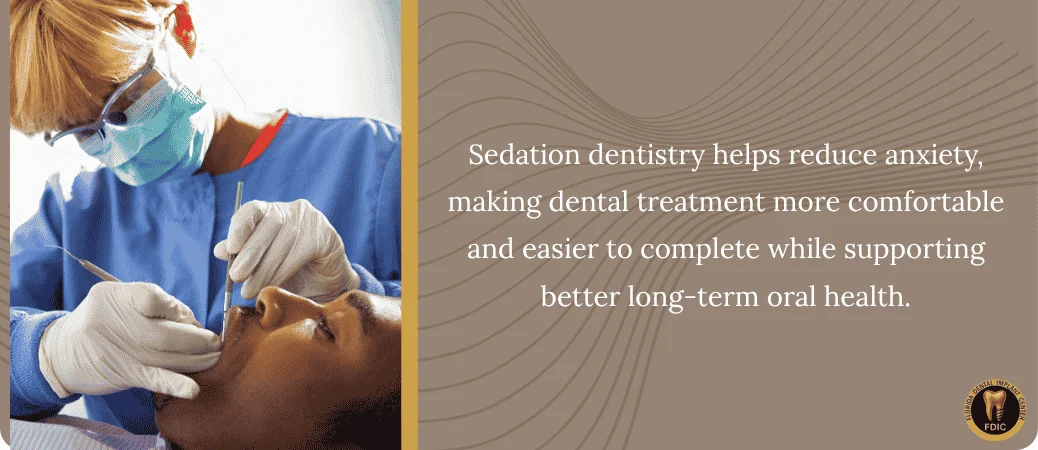
Sedation dentistry bridges the gap between fear and confidence, allowing you to receive necessary care in a calm environment. The medication helps you feel relaxed while your sedation dentist works.
You’ll remain awake during most types of sedation, but you won’t feel the same level of stress or discomfort. The dentist can complete more work in a single visit because you’re comfortable and cooperative.
This approach helps you finally address dental problems you’ve been avoiding.
Regular care becomes achievable when anxiety no longer stands in your way, protecting your overall health from issues like tooth decay and gum disease.
Signs That You Might Benefit from Sedation
You might be a good candidate for a sedation dentistry appointment if you’ve cancelled or avoided dental visits due to fear.
Patients who experience moderate to severe dental anxiety often find relief through sedation options.
Consider sedation if you need extensive dental work completed like root canal, tooth extraction, and dental implants or a smile makeover with a cosmetic dentist. Multiple procedures in one visit become manageable when you’re relaxed.
You should discuss sedation with your dentist if you:
- Have a strong gag reflex that interferes with treatment
- Experience panic attacks when thinking about dental appointments
- Feel physical symptoms like rapid heartbeat or sweating
- Need complex or lengthy procedures
- Have difficulty getting numb with local anesthesia
Your dental fear shouldn’t prevent you from getting the care you need. Talk to your dentist about which sedation option fits your situation best.
Types of Sedation Options in Dentistry
Dentists offer several types of sedation to help you feel calm and comfortable during your appointment.
The level of sedation ranges from mild relaxation to complete unconsciousness, depending on your anxiety level and the dental work you need.
Nitrous Oxide (Laughing Gas)
Nitrous oxide is the mildest form of dental sedation available. You breathe this colorless gas through a small mask that fits over your nose during your procedure.
The effects start working within three to five minutes. You’ll feel relaxed and calm, but you stay fully awake and can respond to your dentist’s instructions.
Some patients describe a light, floaty feeling or mild tingling in their arms and legs.
Your dentist controls how much nitrous oxide you receive throughout your appointment. They can adjust the amount based on how you’re feeling.
When your dental work is done, you’ll breathe pure oxygen through the mask for a few minutes.
The oxygen quickly flushes the nitrous oxide from your system. You won’t feel drowsy or dizzy afterward. This means you can drive yourself home and return to your normal activities right away.
Oral Sedation and Medications
Oral conscious sedation involves taking prescription pills about an hour before your dental appointment. Your dentist might prescribe triazolam, which is in the same family as diazepam.
Other common medications include zaleplon and lorazepam.
This type of sedation makes you very drowsy and relaxed. You might even fall asleep in the dental chair, though your dentist can easily wake you if needed.
You’ll remain conscious enough to follow simple directions like opening your mouth wider.
Key characteristics of oral sedation:
- Creates moderate sedation levels
- Takes effect in 30 to 60 minutes
- Effects can last several hours
- You won’t remember much about the procedure
You’ll need someone to drive you to and from your appointment. The medication stays in your system for several hours after your dental work is finished.
Children who feel anxious about dental visits can receive liquid sedation medications specially formulated for them.
Intravenous (IV) Sedation Techniques
Intravenous sedation delivers medication directly into your bloodstream through a small needle in your arm. This is the deepest level of conscious sedation you can receive in a dental office setting.
IV sedation works best if you have severe dental anxiety or need lengthy procedures. A dental anesthesiologist or specially trained dentist places the IV line and monitors you throughout your appointment.
They check your heart rate and blood pressure constantly and adjust your medication as needed.
Most patients fall asleep during IV sedation. You’ll wake up with no memory of the procedure, sounds, or sensations. The time seems to pass instantly from your perspective.
What to expect with IV sedation:
- Effects begin within seconds to minutes
- Deeper relaxation than oral sedation
- Continuous monitoring of vital signs
- Memory loss of the procedure
You must arrange for a responsible adult to drive you home. Plan to rest for the remainder of the day since the medication takes time to fully wear off.
General Anesthesia for Complex Cases
General anesthesia puts you into a completely unconscious state during dental procedures. You have no awareness, feel no pain, and have zero memory of what happens.
This differs from other types of sedation dentistry where you remain somewhat conscious.
Dentists reserve general anesthesia for complex oral surgeries, patients with severe medical conditions, or individuals who cannot cooperate during treatment.
An anesthesiologist administers the medication and monitors your breathing, heart rate, blood pressure, and oxygen levels throughout the entire procedure.
You’ll receive general anesthesia through an IV line or by breathing gases through a mask. Your body’s reflexes are temporarily stopped, so a breathing tube might be necessary.
The dental team tracks your vital signs continuously using specialized equipment.
Recovery takes longer with general anesthesia compared to other sedation options. You’ll wake up in a recovery area where staff monitors you until the effects wear off.
You might feel groggy, nauseated, or confused for several hours. Someone must stay with you for at least 24 hours after your appointment.
Preparing for Your Sedation Dentistry Appointment
Getting ready for your sedation appointment requires following specific guidelines about fasting, medications, and transportation.
Your dentist will provide detailed instructions based on the type of sedation you’ll receive, whether it’s oral sedation, IV sedation, or general anesthesia.
Pre-Appointment Consultation and Medical Review
Your dentist needs to know your complete medical history before your sedation dentistry appointment. This includes all medications you currently take, both prescription and over-the-counter.
Be honest about any health conditions you have. Heart problems, lung issues, sleep apnea, and liver disease can all affect how your body responds to sedation.
Your dentist also needs to know about any allergies, especially to medications.
Tell your dentist if you’ve had problems with anesthesia in the past. If you’ve ever felt nauseous, dizzy, or had any bad reactions during previous sedation experiences, mention it.
This helps your dental team choose the safest sedation option for you.
Some medications may need to be adjusted before your appointment. Your dentist will tell you which medications to take and which to skip on the day of your procedure.
Pre-Procedure Instructions and Fasting Guidelines
Fasting rules vary depending on your sedation type. For nitrous oxide (laughing gas), you can usually eat normally before your appointment.
For oral sedation, you might need to avoid food for 2-4 hours before taking your medication. Your dentist will give you specific timing instructions for when to take your sedation pill.
IV sedation and general anesthesia require stricter fasting. You’ll typically need to avoid all food and drinks for 6-8 hours before your appointment.
Some dentists allow clear liquids up to 2 hours before, but follow your dentist’s exact instructions.
Don’t drink alcohol for at least 24 hours before your appointment. Alcohol can interact with sedation medications and make them less predictable.
If you take daily medications like blood pressure pills or thyroid medication, ask your dentist if you should take them on the morning of your appointment. Usually you can take essential medications with a small sip of water.
Arranging Transportation and Support
You cannot drive yourself home after receiving oral sedation, IV sedation, or general anesthesia. The sedation medications affect your reflexes, judgment, and coordination for several hours.
You need a responsible adult to drive you to and from your appointment. This person should plan to stay in the waiting area during your procedure. They’ll also need to stay with you at home for a few hours after you return.
Don’t plan to use a taxi or rideshare service unless someone is riding with you. You need someone who can help you walk to the car and get safely inside your home.
Clear your schedule for the rest of the day after your appointment. Don’t plan to work, make important decisions, or care for children or pets. Most people need the remainder of the day to rest and recover.
What to Wear and Bring to Your Visit
Wear loose, comfortable clothing to your appointment. Choose shirts with sleeves that roll up easily if you’re getting IV sedation. Avoid tight necklines or anything that feels restrictive.
Leave jewelry, watches, and valuables at home. You may need to remove these items before your procedure anyway.
Bring your photo ID and insurance cards. Have your payment method ready if you have a balance due.
Women should avoid wearing makeup, nail polish, or false eyelashes. These can interfere with monitoring equipment that tracks your oxygen levels and vital signs during sedation.
If you wear contact lenses, remove them before your appointment or bring your glasses instead. Your eyes may feel dry during the procedure, and contacts can become uncomfortable.
Bring a list of all your current medications including dosages. This helps your dental team keep accurate records and avoid any medication interactions.
What Happens During Sedation Dentistry Procedures
Your sedation dentist will actively monitor your safety throughout the appointment while adjusting medication levels to keep you comfortable and relaxed.
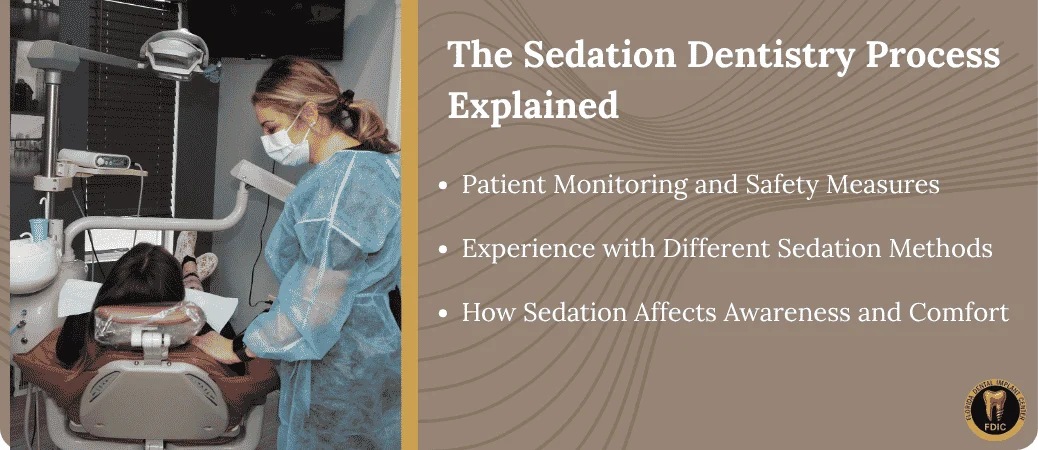
Patient Monitoring and Safety Measures
Your dentist tracks your vital signs throughout the entire procedure. They check your heart rate, blood pressure, and oxygen levels using special equipment.
With nitrous oxide, your dentist adjusts the gas flow through a mask to maintain the right level of relaxation. They can quickly change the amount you receive at any moment.
During IV sedation, a dental anesthesiologist or trained sedation dentist watches your vital signs on a monitor continuously.
They adjust the medication through the IV line in your arm based on what they see. Your provider will respond right away if anything needs attention.
For oral conscious sedation, your dentist monitors how you respond to the medication you took before your appointment. They watch your breathing, alertness, and comfort level throughout your treatment.
A trained team member stays with you the entire time. They make sure you’re breathing well and responding normally to the dental work being done.
Experience with Different Sedation Methods
Your experience during sedation dentistry depends on which type you receive. With nitrous oxide, you’ll feel calm and relaxed within three to five minutes. You stay awake and can respond to your dentist’s requests.
Oral sedation makes you very drowsy. You might fall asleep during your procedure, which is completely normal.
Your dentist will gently wake you if they need you to open wider or move your head.
With intravenous sedation, you enter a deeper state of relaxation. You may fall asleep and won’t remember the procedure when you wake up.
This is the deepest form of conscious sedation available in a dental office.
How Sedation Affects Awareness and Comfort
You remain conscious during dental sedation, but your awareness level varies by method. You can still respond to questions and follow instructions, even though you feel very relaxed.
The medication blocks your pain awareness during treatment. You won’t notice discomfort even though your dentist is working on your teeth.
Local anesthesia numbs the treatment area while sedation keeps your mind calm.
With moderate sedation from oral or IV methods, you might drift in and out of light sleep. Your memory of the appointment will be fuzzy or completely gone.
This helps if you have severe dental anxiety about procedures.
Nitrous oxide wears off quickly after your dentist gives you pure oxygen through the mask. You’ll feel normal within minutes and can even drive yourself home.
Post-Procedure and Recovery Care Tips
After your sedation appointment ends, you’ll experience different effects depending on the type of sedation you received.
Most patients feel groggy or tired for several hours, and you’ll need to follow specific care instructions to recover safely.
Typical Side Effects and What to Expect
Recovery time varies based on the sedation method used during your procedure. Nitrous oxide wears off within minutes, so you’ll feel alert quickly.
Oral sedation can make you feel drowsy for several hours after your appointment. IV sedation and general anesthesia have the longest-lasting effects, often keeping you groggy for the rest of the day.
Common side effects you might notice include feeling sleepy, dizzy, or lightheaded. Some patients experience mild nausea or have trouble with coordination and balance.
You may also feel confused or have gaps in your memory about the procedure.
These effects are normal and will fade as the medication leaves your system. Most people need 12 to 24 hours to fully recover from moderate sedation or IV sedation.
Transportation and Activity Restrictions
You cannot drive yourself home after receiving oral sedation, IV sedation, or general anesthesia. Plan to have a responsible adult take you home and stay with you for several hours.
Even if you feel fine, the sedation affects your reflexes and judgment.
Avoid operating machinery or making important decisions for the rest of the day. Skip any strenuous activities like exercise or heavy lifting. Your body needs time to process the medication, so take the day off work or school.
Most patients can return to normal activities the next day once they feel clear-headed and steady on their feet.
How to Care for Yourself After Dental Sedation

Rest is the most important thing you can do after your appointment. Go home and relax in a comfortable spot. Drink plenty of water to help flush the medication from your system.
Start with light, bland foods like toast, crackers, or soup. Avoid alcohol and caffeine for at least 24 hours. If you feel queasy, try sipping ginger tea or eating small amounts of food throughout the day.
Follow any specific instructions your dentist gave you about caring for your mouth. If you had dental work done, stick to soft foods and avoid anything that could irritate the treatment area.
Keep your phone nearby in case you need help, and don’t hesitate to call your dentist if you experience severe pain, trouble breathing, or vomiting.
Frequently Asked Questions
Many patients wonder about the practical details of sedation dentistry, from what medications they’ll receive to whether they can drive home afterward.
Understanding these common concerns helps you prepare mentally and practically for your appointment.
What should I expect before, during, and after a sedation dental visit?
Before your appointment, you’ll need to follow specific preparation instructions. For deeper sedation options like IV sedation, you’ll typically need to fast for 6-8 hours beforehand.
You must arrange for someone to drive you to and from your appointment.
You should wear comfortable, loose-fitting clothing to your visit. Avoid bringing valuables or wearing jewelry. Your dentist will provide a complete list of instructions when you schedule your appointment.
During your sedation appointment, the dental team will first get you settled and place monitoring equipment to track your vital signs throughout the procedure.
If you’re receiving IV sedation, they’ll place a small catheter in your hand or arm. Within seconds to minutes of receiving sedation medication, you’ll feel noticeably calmer and more relaxed.
The dental work itself will feel like it passes quickly due to time distortion under sedation. An hour-long procedure might feel like only 10-15 minutes to you.
After your procedure, you’ll spend time in a recovery area while the sedation wears off. You’ll feel groggy and sleepy. Your driver will take you home, where you should rest for the remainder of the day.
Plan to take the day off from work and avoid making important decisions for 24 hours. Have soft foods ready at home since your mouth may be numb or tender.
Will I be fully asleep, or just very relaxed, during dental sedation?
The level of consciousness during sedation depends on which type you receive. With nitrous oxide (laughing gas), you remain fully awake and aware but feel very relaxed and calm.
Oral sedation creates a drowsy state where you may drift in and out of sleep. You can still respond to instructions but likely won’t remember much of the appointment afterward.
IV sedation produces deeper relaxation where most patients have little to no memory of the procedure. You’re technically conscious but may feel like you were asleep the entire time.
General anesthesia is the only option where you’re completely unconscious. This is typically reserved for extensive procedures or patients with severe anxiety.
Your dentist will recommend the appropriate sedation level based on your anxiety level, the length of your procedure, and your medical history. Sedation options range from minimal to deep, giving you and your dentist flexibility to choose what works best.
Is dental sedation safe, and what risks should I know about?
Dental sedation is very safe when administered by trained professionals. Dentists who offer sedation undergo specialized training and certification in sedation techniques and emergency protocols.
During your procedure, the dental team continuously monitors your vital signs including blood pressure, heart rate, and oxygen levels. This constant monitoring allows them to quickly address any changes.
The most common side effects are minor. These include drowsiness, grogginess, nausea, dry mouth, and headache. These effects typically resolve within a few hours after your appointment.
More serious complications are rare but can include allergic reactions, breathing difficulties, or changes in heart rate or blood pressure.
Your dentist reviews your complete medical history before sedation to identify any risk factors.
Certain medical conditions require extra caution with sedation. These include sleep apnea, obesity, heart conditions, and lung disease. Be completely honest about your health history during your consultation.
Answering common patient concerns about sedation helps ensure you understand both the benefits and potential risks. Your dentist can explain how they minimize risks based on your specific situation.
What medications are commonly used for oral sedation or IV sedation in dentistry?
For oral sedation, dentists commonly prescribe medications from the benzodiazepine family. Triazolam (Halcion) is one of the most frequently used options. Diazepam (Valium) and lorazepam (Ativan) are also common choices.
These medications work by calming your central nervous system. You typically take the pill about an hour before your appointment. Some dentists prescribe an additional dose to take the night before to help you sleep.
IV sedation often uses similar medications but delivers them directly into your bloodstream. Midazolam (Versed) is a popular choice for IV sedation because it works quickly and wears off relatively fast.
Propofol is another IV medication used for deeper sedation. It produces a more profound effect and is often combined with pain medications like fentanyl.
The specific medication your dentist chooses depends on several factors. These include the length of your procedure, your anxiety level, your medical history, and how deeply you need to be sedated.
Your dentist will explain which medication they plan to use and why it’s appropriate for your situation. Never take sedation medications without direct supervision from your dental team.
Will I feel pain during the procedure if I’m sedated?
Sedation and pain relief are two different things, though they often work together. Sedation reduces your anxiety and awareness but doesn’t necessarily block pain signals.
Your dentist will use local anesthetic (numbing injections) in addition to sedation. The local anesthetic prevents you from feeling pain during the dental work. The sedation helps you stay calm and comfortable.
With deeper sedation levels, you may not even remember receiving the numbing injections. Many patients report that the sedation made them not care about the injection, even if they were somewhat aware of it.
During the procedure itself, you shouldn’t feel pain. You might sense pressure or movement, especially with lighter sedation levels. But the local anesthetic prevents actual pain signals from reaching your brain.
If you do experience discomfort during your procedure, you can signal to the dental team. They can administer more local anesthetic or adjust your sedation level as needed.
After your sedation wears off and the local anesthetic fades, you may experience some soreness or discomfort. Your dentist will provide pain management instructions and may prescribe medication if needed.